

Are there any ventilation requirements for employee beds?
Oct 13, 2026
Are there any ventilation requirements for employee beds?
As a supplier of employee beds, I've often been asked about the ventilation requirements for these beds. It's a crucial topic that directly impacts the health, comfort, and well - being of employees. In this blog, we'll explore the importance of ventilation for employee beds, the specific requirements, and how our beds can be part of a well - ventilated sleeping environment.
The Importance of Ventilation for Employee Beds
Ventilation is not just about fresh air; it plays a multi - faceted role in ensuring a good sleeping environment. When employees sleep, they exhale carbon dioxide, and the body releases moisture through sweating. Without proper ventilation, the air around the bed can become stale, humid, and filled with pollutants.
Stale air can lead to a range of problems. High levels of carbon dioxide can cause headaches, fatigue, and difficulty concentrating. Humid air creates a breeding ground for mold, mildew, and dust mites. These allergens can trigger respiratory problems, such as asthma and allergies, and also cause skin irritations.
Moreover, a well - ventilated area helps to regulate the temperature around the bed. In a hot and stuffy environment, employees are more likely to have disrupted sleep, which can affect their productivity at work. On the other hand, proper air circulation can keep the sleeping area cool and comfortable, promoting a deeper and more restful sleep.
Specific Ventilation Requirements
The specific ventilation requirements for employee beds can vary depending on several factors, including the size of the room, the number of beds in the room, and the local climate.
Air Exchange Rate: A general rule of thumb is that there should be at least 0.35 air changes per hour. This means that the entire volume of air in the room should be replaced at least 0.35 times every hour. For a small room with a single employee bed, this might not require a large ventilation system. However, in a dormitory - style setting with multiple beds, a more powerful ventilation system may be necessary.
Opening Windows and Doors: Natural ventilation is an effective and cost - efficient way to ensure proper air circulation. Windows should be opened regularly to allow fresh air to enter the room and stale air to exit. In some cases, cross - ventilation can be achieved by opening windows on opposite sides of the room. This creates a flow of air that can sweep through the room, carrying away pollutants and moisture.
Mechanical Ventilation: In areas where natural ventilation is not sufficient, mechanical ventilation systems can be used. These include exhaust fans, which can be installed in the ceiling or near the bed to remove stale air. Some modern ventilation systems also have air filters that can remove dust, pollen, and other pollutants from the air.
In addition to the above, it's also important to consider the placement of the bed in the room. The bed should not be placed directly in front of a ventilation duct or an area where there is no air circulation. This ensures that the employee receives a consistent supply of fresh air while sleeping.
How Our Employee Beds Fit into a Well - Ventilated Environment
As a supplier of employee beds, we understand the importance of ventilation in creating a healthy sleeping environment. Our beds are designed with this in mind.
Materials Selection: We use breathable materials in the construction of our beds. For example, the mattresses are made with high - quality foam that has open - cell structures, allowing air to circulate freely. This helps to reduce heat and moisture buildup on the mattress, keeping the employee cool and dry throughout the night.
Bed Design: Our beds are designed to allow for maximum air circulation. The frames are constructed in a way that provides space under the bed, which promotes air movement. This helps to prevent the accumulation of dust and moisture under the bed, which can be a source of allergen growth.
We offer a wide range of beds suitable for different ventilation needs. For example, if you are looking for a bed for a student dormitory, our Student Dormitory Beds are designed to fit well in a shared room with limited space. These beds are lightweight and easy to arrange to ensure proper air circulation.
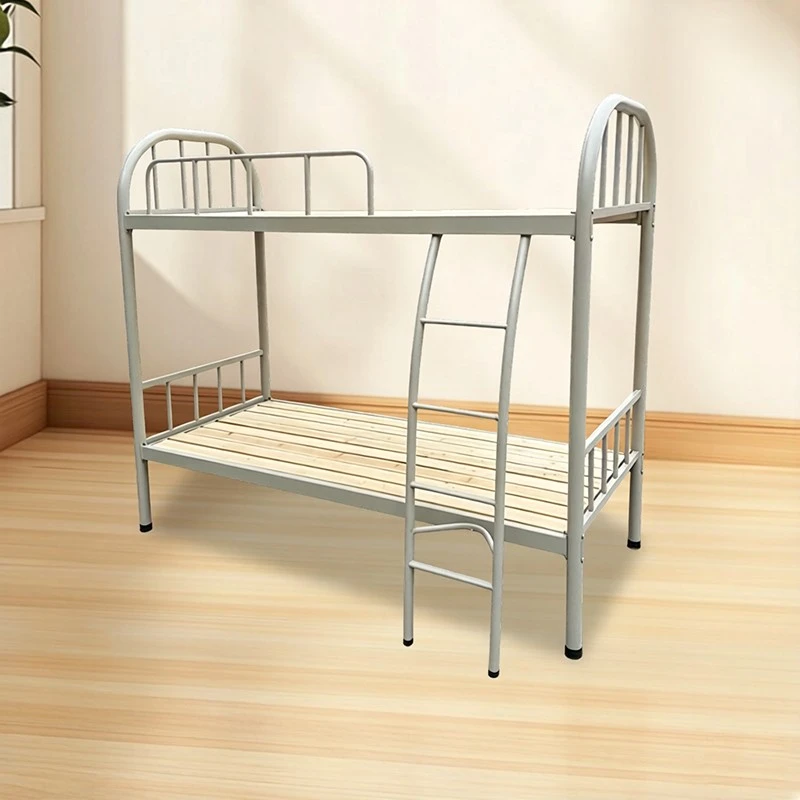

If you need a single bed for an individual employee, our Sturdy Single Bed is a great choice. It is made with a durable frame that provides stability and also allows for good air flow around the bed.
In a dormitory - style setting where space is at a premium, our Double - Tier Beds can be a practical solution. These beds are designed to maximize the use of space while still ensuring adequate ventilation. The upper and lower bunks are separated by a sufficient distance to allow for air movement.
For employees who need to sleep outdoors, such as those working in construction or camping sites, our Outdoor Camp Bed is designed to be lightweight and breathable. The materials used in the construction of this bed can withstand outdoor conditions while still providing a comfortable and well - ventilated sleeping surface.
Our Sturdy Metal Bed is another option that offers both durability and good ventilation. The metal frame allows air to pass through easily, and it can be paired with a variety of breathable mattresses.
Conclusion
In conclusion, ventilation is an essential aspect of the sleeping environment for employees. Proper ventilation helps to maintain good air quality, regulate temperature and humidity, and prevent the growth of allergens. As a supplier of employee beds, we are committed to providing products that are designed to fit into a well - ventilated environment.
If you are interested in improving the ventilation of your employees' sleeping areas and are in the market for high - quality employee beds, we would love to discuss your needs. Whether you are looking for a specific type of bed or need advice on ventilation solutions, our team of experts is here to help. Contact us to start a conversation about your procurement needs and how we can provide the best solutions for your employees' well - being.
References
- World Health Organization. Guidelines for indoor air quality: Dampness and mould.
- American Society of Heating, Refrigerating and Air - Conditioning Engineers (ASHRAE). Standards for ventilation in occupied spaces.